
< Más Articulos : UNGRATEFUL PEOPLE AND UNFRIENDLY FRIENDS (Times of Israel - 27 Apr 2026)
-
-
UNGRATEFUL PEOPLE AND UNFRIENDLY FRIENDS (Times of Israel - 27 Apr 2026)
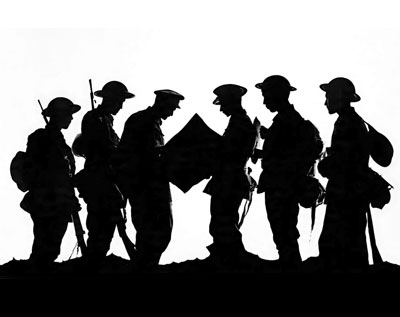
To illustrate my point, I will step back in history, beginning with World War I.
WORLD WAR I
The United States’ involvement in World War I was decisive. Even before formally entering the conflict in 1917, it had already become a crucial economic lifeline to the Allies, supplying loans, weapons, food, and raw materials that sustained Britain and France through years of attrition.
Once engaged, American troops played a key role in major offensives, including the Meuse-Argonne campaign, helping to break German lines at a critical moment. Combined with its overwhelming industrial and financial support, U.S. intervention tipped the balance and accelerated Germany’s defeat in November 1918.
(The Allied powers in WWI included France, the United Kingdom, Russia, and later the United States, alongside Italy, after switching sides in 1915, as well as Japan, Belgium, Serbia, Romania, and Greece.)
WORLD WAR II
In World War II, the American role was even more decisive. Following Japan’s attack on Pearl Harbor, the United States entered the war, and Germany and Italy soon declared war on it.
The U.S. contribution to victory rested on an unmatched combination of industrial might, strategic coordination, and military mobilization across two global theaters. By 1944, the United States had become the world’s leading producer of arms, building ships faster than they could be sunk and producing nearly 100,000 aircraft annually. Through the Lend-Lease Act, it sustained Britain and the Soviet Union with vehicles, aircraft, fuel, and food.
At the same time, over 16 million Americans were mobilized to fight in both Europe and the Pacific. In Europe, U.S. forces led decisive invasions and strategic bombing campaigns; in the Pacific, they achieved naval dominance and advanced through relentless island-hopping operations. American innovation, from radar and penicillin to amphibious warfare and the Manhattan Project, helped reshape the outcome of the war.
It is difficult to imagine the course of the 20th century without this intervention. Without the United States, Europe today would almost certainly look very different.
(The Allied powers in WWII included the Big Four: United States, United Kingdom, Soviet Union, China. Other Important Allied Countries where: France, Canada, Australia, New Zealand. India, Poland, Netherlands, Belgium, Norway, Greece, Yugoslavia, Brazil, South Africa)
THE PRESENT
Fast forward to today. The United States continues to bear a disproportionate share of the burden of Western defense, accounting for roughly 60% of total NATO defense spending in 2025, approximately $980 billion out of $1.59 trillion.
And yet, when the United States now seeks moral and indirect support in confronting threats such as Iran, some of its historic allies, particularly France and the United Kingdom, appear hesitant, distant, or unwilling to stand firmly by its side.
At the same time, countries such as Germany and Italy, once adversaries, whose populations were ultimately spared from enduring totalitarian regimes, are increasingly adopting positions that can be perceived as critical or even hostile.
Nations, of course, are free to pursue their own interests and define their own policies. But there is a difference between independence and ingratitude; between strategic autonomy and the posture of an unfriendly ally.
History carries weight. Memory matters. And the example set for future generations matters even more.
To forget who stood by you in your darkest hours, or to turn away when that ally seeks your support, is not only shortsighted. It is a disservice to the very values that once united the free world.
Shame on those who choose to forget.
( Por: Yehudi Sabbagh , 27/04/2026 )