
< Más Articulos : The Modern Palestine Narrative (Times of Israel - 28 Jul 2026)
-
-
The Modern Palestine Narrative (Times of Israel - 28 Jul 2026)
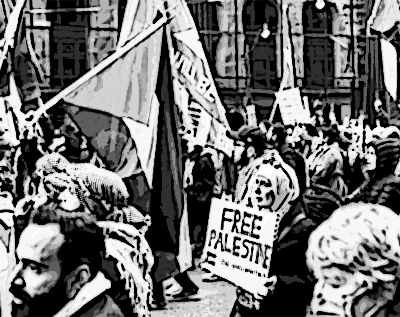
The modern Palestine narrative began when the UN proposed partitioning the British Mandate for Palestine into two states, Jewish leaders accepted the plan and proclaimed the State of Israel in May 1948. Arab leaders rejected it, went to war, and no Arab state was created.
Hundreds of thousands of Palestinian Arabs were displaced. Instead of establishing the Arab state envisioned by the UN, neighboring Arab governments focused on reversing Israel's creation. Many Palestinians remained stateless, living in refugee camps and relying on neighboring countries that largely refused either to integrate them or to pursue the creation of the state that had originally been offered.
In the decades that followed, organizations such as the Palestine Liberation Organization (PLO) and various fedayeen groups emerged as the political and military leaders of the Palestinian cause. At the same time, international concern for Palestinian refugees grew steadily. Billions of dollars in humanitarian aid flowed into the region, yet the refugee crisis remained largely unresolved.
This prolonged crisis created powerful political incentives. Rather than resolving the refugee issue, Palestinian militant organizations, several Arab governments, and later Iran-backed Islamist movements, including the Islamic Revolutionary Guard Corps (IRGC) and its proxies, Hezbollah, Hamas, and the Houthis, came to see the Palestinian cause not only as a rallying cry but as an exceptionally effective financial, political and propaganda tool. Over time, the Palestinian issue became the lens through which much of the world viewed the entire Middle East conflict, reducing an extraordinarily complex regional struggle to a simple story: Israel as Goliath and the Palestinians as David.
As the conflict evolved, accusations grew that militant groups deliberately embedded military infrastructure within civilian areas and used their own populations as human shields, placing women, children, and the elderly at the center of the battlefield. Every civilian tragedy reinforced a narrative that portrayed Israel as the sole aggressor while minimizing the broader political, military, and ideological context of the conflict.
Over time, that narrative spread far beyond the Middle East. It was amplified by substantial financial support from countries such as Qatar and by networks linked to Islamist movements, gaining influence in Western universities, media organizations, corporations, educational institutions, governments, and activist groups. The Palestinian cause became more than a regional dispute; it evolved into a global political symbol used to mobilize public opinion on a wide range of issues.
The events following October 7, 2023, demonstrated the power of that narrative. Within a day of Hamas carrying out the deadliest massacre of Jews since the Holocaust, large pro-Palestinian demonstrations had already taken place across many Western cities, while comparatively little attention was given to the unprecedented number of Israeli civilians killed. The speed of that reaction showed how deeply rooted the Palestine narrative had become. Supporting the Palestinian cause had evolved into a universal call to stand with those seen as oppressed, marginalized, rejected, and misunderstood, often regardless of the specific circumstances that had triggered the conflict.
Today, millions around the world have embraced the Free Palestine - From the River to the Sea movement as a unifying rallying cry. Through peaceful demonstrations, and in some cases violent acts, they express outrage over what they see as profound injustice. For many supporters, the slogan has come to represent far more than the Israeli-Palestinian conflict; it has become a broader symbol of solidarity with people they believe are victims of social wrong.
Meanwhile, many Palestinians remain caught between competing political forces. Their suffering is real, yet it continues to be exploited by regional actors who benefit more from prolonging the conflict than from ending it. Calls for Palestinian self-determination are often tied to organizations such as Hamas and other militant groups whose stated objective is continued confrontation with Israel. From this perspective, ongoing violence produces more civilian casualties, reinforcing the same narrative that has shaped international opinion for decades.
The greatest tragedy is the reality this narrative has created: the Palestinian people themselves remain its principal victims, not only of war, but also of leaders and regional powers that have repeatedly found greater value in perpetuating their suffering than in securing their future. Nor should we forget the Israeli people, who have endured nine major conventional wars since 1948, paying a heavy price in lives lost, shattered dreams, and missed opportunities for peace.
I look forward to a Post-Modern Palestine Narrative in which Palestinians and Israelis live in peace as neighbors, committed to building their own futures rather than destroying each other'
https://blogs.timesofisrael.com/the-modern-palestine-narrative/
( Por: Yehudi Sabbagh , 28/07/2026 )